Table of Content
UN forces led by General Douglas MacArthur led the counterattack, scoring a stunning surprise victory with an amphibious landing at the Battle of Inchon that nearly trapped the invaders. UN forces marched north, toward the Yalu River boundary with China, with the goal of reuniting Korea under UN auspices. On June 25, 1950, the North Korean army under Kim Il-sung invaded South Korea, starting the Korean War. In the early weeks of the war, the North Koreans easily pushed back their southern counterparts. Truman called for a naval blockade of Korea, only to learn that due to budget cutbacks, the U.S. On June 24, 1948, the Soviet Union blocked access to the three Western-held sectors of Berlin.
Dan has nearly 10 years of accounting experience centered around real estate and development. Prior to joining 29th Street Development Dan was with a prestigious Chicago based development firm working on $1B+ class A+ trophy high-rise developments across the country. Dan has experience at all levels of the development chain including accounting for $500M+ of construction for a leading Midwest general contractor before transitioning into the ownership side. John Kitson is the Executive Vice President of Development for 29th Street Capital. He is responsible for leading all development and construction activities, from pre-development to implementation. During his 20 years of experience in real estate development, he has supported the delivery of more than 7,000 units of multifamily and student housing with over $2.5 billion in assets.
Private high school in Moscow:
When he left office, Truman's administration was heavily criticized, though critical reassessment of his presidency has improved his reputation among historians and the general population. Realtor.com® wants to make sure you can search mobile homes with ease. That is why we have compiled a list of 5 mobile homes that are currently for sale within Cayuga, IN residential boundaries, including open house listings. View each home individually and read the property details, which include the price, sales history, property tax, school information and much more. Get instant access to property photos so you can explore the home online.
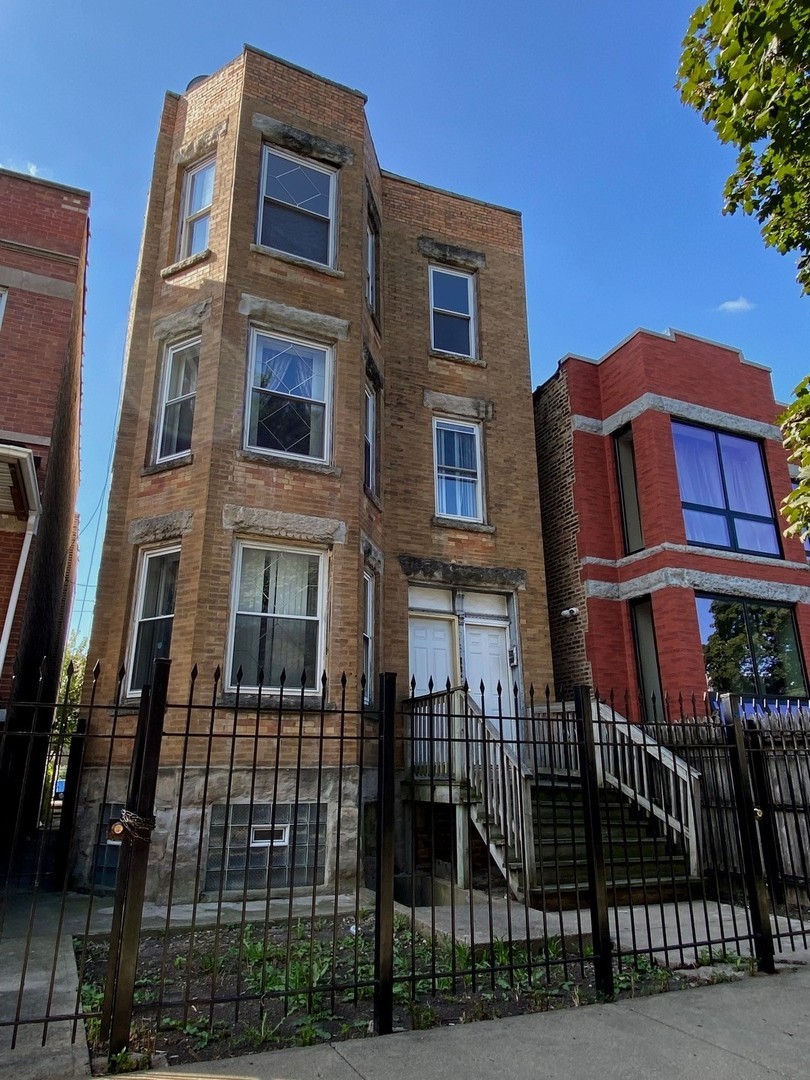
Some of the hottest neighborhoods near Marshall, IL are The Avenues, South 13th Street, Collett Park, Farrington's Grove, Liberty Avenue. You may also be interested in single family homes and condo/townhomes for sale in popular zip codes like 47802, 62441, or three bedroom homes for sale in neighboring cities, such as Terre Haute, Paris, West Terre Haute, Clinton, Casey. Richard Choi serves as Development Manager for 29th Street Capital. He is responsible for leading the development activities for his projects from pre-development to implementation.
How to buy a home in Marshall, IL
Truman was gravely concerned further escalation of the war might lead to open conflict with the Soviet Union, which was already supplying weapons and providing warplanes . Therefore, on April 11, 1951, Truman fired MacArthur from his commands. The Soviet Union's atomic bomb project progressed much faster than had been expected, and they detonated their first bomb on August 29, 1949. Over the next several months there was an intense debate that split the U.S. government, military, and scientific communities regarding whether to proceed with the development of the far more powerful hydrogen bomb.

Domestically, the postwar economic challenges such as strikes and inflation created a mixed reaction over the effectiveness of his administration. In 1948, he proposed Congress pass comprehensive civil rights legislation. Congress refused, so in 1948 Truman issued Executive Order 9980 and Executive Order 9981 which desegregated the armed forces and federal agencies. Harry S. Truman (May 8, 1884 – December 26, 1972) was the 33rd president of the United States, serving from 1945 to 1953. A leader of the Democratic Party, he previously served as the 34th vice president from January to April 1945 under Franklin Roosevelt and as a United States senator from Missouri from 1935 to January 1945.
Return Policy
In the end, Truman held his progressive Midwestern base, won most of the Southern states despite the civil rights plank, and squeaked through with narrow victories in a few critical states, notably Ohio, California, and Illinois. The final tally showed the president had secured 303 electoral votes, Dewey 189, and Thurmond only 39. The defining image of the campaign came after Election Day, when an ecstatic Truman held aloft the erroneous front page of the Chicago Tribune with a huge headline proclaiming "Dewey Defeats Truman."

Truman was reluctant to take a more radical stance, because he felt it could threaten civil liberties and add to a potential hysteria. At the same time, he felt political pressure to indicate a strong national security. It is unclear to what extent President Truman was briefed of the Venona intercepts, which discovered widespread evidence of Soviet espionage on the atom bomb project and afterward. Truman continued his own loyalty program for some time while believing the issue of communist espionage was overstated. In 1949, Truman described American communist leaders, whom his administration was prosecuting, as "traitors", but in 1950 he vetoed the McCarran Internal Security Act. Truman would later state in private conversations with friends that his creation of a loyalty program had been a "terrible" mistake.
Danville, IL Real Estate & Homes for Sale
Eric Solberg is an Analyst in the Asset Management group at 29th Street Capital. Eric supports our asset managers in Colorado, Ohio, Atlanta, and Virginia. His duties include investment analysis, capital projects management, strategy implementation, market research, and portfolio wide reporting.

Truman then thought he might serve out his career in some well-paying county sinecure; circumstances changed when Pendergast reluctantly backed him as the machine's choice in the 1934 Democratic primary election for the U.S. Senate from Missouri, after Pendergast's first four choices had declined to run. In the primary, Truman defeated Congressmen John J. Cochran and Jacob L. Milligan with the solid support of Jackson County, which was crucial to his candidacy. Also critical were the contacts he had made statewide in his capacity as a county official, member of the Freemasons, military reservist, and member of the American Legion. In the general election, Truman defeated incumbent Republican Roscoe C. Patterson by nearly 20 percentage points in a continuing wave of pro-New Deal Democrats elected during the Great Depression.
The containment policy was developed by State Department official George Kennan in 1947. Kennan characterized the Soviet Union as an aggressive, anti-Western power that necessitated containment, a characterization which would shape US foreign policy for decades to come. The idea of containment was to match Soviet aggression with force wherever it occurred while not using nuclear weapons. The policy of containment created a bipolar, zero-sum world where the ideological conflicts between the Soviet Union and the United States dominated geopolitics. Due to the antagonism on both sides and each countries' search for security, a tense worldwide contest developed between the two states as the two nations' governments vied for global supremacy militarily, culturally, and politically.
Senate, Truman was transferred to the General Assignments Group, a holding unit for less active officers, although he had not been consulted in advance. Truman protested his reassignment, which led to his resumption of regimental command. He was an inactive reservist from the early 1940s until retiring as a colonel in the then redesignated U.S.
MacArthur meanwhile returned to the United States to a hero's welcome, and addressed a joint session of Congress, a speech the president called "a bunch of damn bullshit." As a Wilsonian internationalist, Truman supported Roosevelt's policy in favor of the creation of the United Nations and included Eleanor Roosevelt on the delegation to the first UN General Assembly. With the Soviet Union expanding its sphere of influence through Eastern Europe, Truman and his foreign policy advisors took a hard line against the USSR. In this, he matched U.S. public opinion which quickly came to believe the Soviets were intent upon world domination. Truman cooperated closely with the Republican leaders on foreign policy but fought them bitterly on domestic issues. The power of the labor unions was significantly curtailed by the Taft–Hartley Act which was enacted over Truman's veto.


No comments:
Post a Comment